Archive | faith RSS feed for this section

The family is God’s work

13 Jun

Have you ever noticed that many adults these days seem to be confused about a lot of things? Even people of faith seem confused about the direction our country is going, about our culture, and even about our faith.

Certain elements in our culture are working hard to feed that confusion by turning things we used to take for granted upside down. What was once right is now wrong. What was once acceptable is now taboo. What was once taboo is now in vogue. Not least among the things our culture has twisted are marriage and the family.

The modern understanding of the family as the “domestic church” developed during the Second Vatican Council. The council concluded that the smallest articulation of the church is not the parish, but the family. This is where the essential teachings in catechesis, prayer and morality should be lived out in order to impart the faith to our children.

This also means that the family is not just a sociological unit. Rather, God created the family to play a specific role in his plan of salvation — and to model Christ’s relationship with the Church. The family isn’t simply two adult persons who raise children in their own particular set of values (as our confused society would have you believe). God established marriage as the exclusive and permanent bonding of a man and a woman, the two becoming “one flesh” (Gen 2:22-24).

Similarly, Christ is made “one body” with his bride, the Church (Eph 5:21-32). In doing so, God makes us his own. His love for the Church is fruitful, just as he established marriage to be fruitful.

Blessed John Paul II

Blessed John Paul II knew this very well. His parents modeled the Holy Family for him and his brother. In his 1960 book Love and Responsibility, he wrote: “Marriage is an act of will that signifies and involves a mutual gift, which unites the spouses and binds them to their eventual souls, with whom they make up a sole family — a domestic church.”

John Paul also understood that the devil, in his jealousy, seeks to obliterate anything that calls people to holiness —especially the family. “At a moment of history in which the family is the object of numerous forces that seek to destroy it,” he wrote in his 1981 apostolic exhortation Familiaris Consortio, “and aware that the well-being of society and her own good are intimately tied to the good of the family, the Church perceives in a more urgent and compelling way her mission of proclaiming to all people the plan of God for marriage and the family” (#3).

And what is the Church’s plan for marriage and the family? We are called to model the self-giving, sacrificial love that Christ has for his Church. If we do that well, the confusion that plagues our society will evaporate as quickly as the sun dispels the morning fog.

Patrick Novecosky is the founder and editor of The Praetorium. This article first appeared in the June issue of Legatus Magazine. Reprinted with permission.

Rising from the Ashes

14 Apr

MY FAITH & FAMILY: Immaculée Ilibagiza shares the power of prayer — even in the darkest of places

by Patrick Novecosky
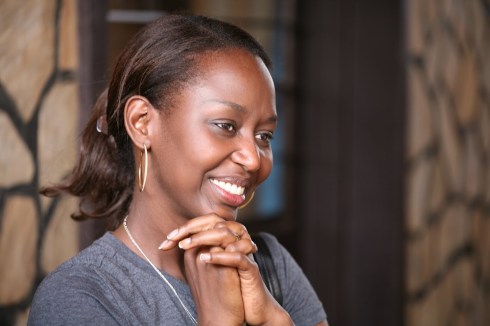
The cultural distance between rural Rwanda and Midtown Manhattan is almost as wide as the Grand Canyon. But Immaculée Ilibagiza has walked the line between her African roots and her new life in America with grace and passion, sustained by her devotion to the Mother of God.

“My faith was everything,” she says, recalling her miraculous survival during the 1994 Rwandan genocide. “I wouldn’t be here today if it wasn’t for my Catholic faith.”

A sought-after public speaker and New York Times best-selling author, Immaculée spent more than three months crammed into a small bathroom with seven other women during the genocide that claimed the lives of nearly 1 million people, including her parents and two brothers. She credits her parents’ faith and prayers not only for her survival, but also for her own faith, which sustained her during the ordeal.

“I grew up praying all the time,” she says. “My family prayed in front of the cross on our knees every night before we went to sleep. I remember the first step that brought me closer to God. It was in the fourth grade. My teacher read us the story of Our Lady of Fatima. I was struggling with whether faith was real and questioning so many things, but when she read that, it was like something convinced me that our faith is real.”

Immaculée’s father had a profound influence on her and their entire village. A Protestant convert to Catholicism, she says his sacrificial love and ardent prayer life helped form her love for the Church.

“My dad was the director of Catholic schools, and he gave all he had. That was his way. There was not one night that my family didn’t pray together. We prayed the Rosary and a number of other prayers — the Act of Faith, St. Michael, Hail Mary, Our Father. We went to church together and fasted together during Lent.

“Sunday was a day to dress up and go to church,” she explains. “No more work. It was a time to invite people to have dinner together. It was almost like a holy day every Sunday, and we always wore our best clothes, our best shoes.”

When Immaculée was finishing primary school, she nearly missed the opportunity to go to high school, which was only possible through a government scholarship. She was a good student, but because she was a Tutsi, the ruling Hutus kept her from advancement.

“It was a great sadness for my whole family for me not to have a scholarship,” she says. “My parents had to send me to a private school, and it was really expensive. They had to sell cows and land to get me there.”

Two years into high school, she had to take another exam to get into a better high school with government sponsorship. When she passed, her father threw a huge party, leaving Immaculée mystified.

“I said to him, ‘What is this? I know school is my future, but it’s not that important.’ He said, ‘You don’t understand. For two years I said the Rosary every single day for this intention — all the mysteries.’ So, not only did I get the scholarship, but I got into the exact school that my father had begged God to send me to.

“It was a shock for me. I wondered how God could answer such specific prayers.  From that moment, I started saying the Rosary every morning. I went to bed with rosary beads in my hand. I woke up saying the Rosary, I slept saying it, asking God to help me pass my exams, to help me be good, to have a future.”

But while she was home from college on Easter break in 1994, life took an unexpected turn for Immaculée and her family. The assassination of Rwanda’s president ignited tensions between Tutsis and Hutus, sparking the genocide.

Just before Immaculée was rushed off to hide in a pastor’s bathroom, her father pulled out his rosary. “When we were separated during the genocide, he gave me a rosary,” she says. “That was the last gift he ever gave me. Even in his last moments, he asked people to pray. He said if this is from the government, we cannot stop it. It’s a chance to prepare ourselves to meet God and go to heaven.”

After tensions cooled, Immaculée was able to leave the country. She eventually found work with the United Nations, which brought her to the U.S. where she penned her first book, Left to Tell; Discovering God Amidst the Rwandan Holocaust. It has since been published in 15 languages.  A full-length Hollywood film about her experience is also in the works.

In 2008, Immaculée wrote a follow-up book, Led by Faith: Rising from the Ashes of the Rwandan Genocide, and a book about Our Lady of Kibeho, the first Vatican-approved Marian apparition in Africa. Her Left to Tell Charitable Fund provides support for orphans in Rwanda.

Now, Immaculée and her family, including her daughter Nikki (11) and son Bryan (8), live in the heart of New York City.

“I used to feel like I would not get married and have children because I didn’t want to suffer if something bad should happen to them. I used to be worried all the time like my mother,” she explains. “Slowly, I have grown to understand that they are God’s children and he put them in my hands, to love them and not be scared about what could happen.

“Having children of my own has made me realize the purity of God’s love. If he loves me better than I love my own children, how can that be!? Jesus said you don’t give your children stones when they ask for bread. How much more does God love us! He gives us so much more.”

Despite the cultural chasm between her upbringing in Africa and the challenge of raising children in New York, Immaculée says her children already grasp the fundamentals of the Catholic faith.

“Many times they play Our Lady and Juan Diego. I’ll find my daughter standing on the table and she’ll have something on her head and she’s opening her arms and saying, ‘My son, Juan Diego!’ He had something he wrapped around his shoulders, and he says, ‘My Lady! My Queen!’”
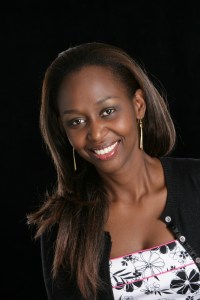
Immaculée Ilibagiza

Immaculée says she’s big on incorporating the Catholic faith into all aspects of their daily lives. She says she has the kids on a “program” that includes books, prayer and even children’s videos on the lives of the saints.

“People ask me how I teach the faith to my children. You get them where they can understand. I have cartoons of Fatima and Lourdes and they show their friends,” she says. “One time I told Nikki to be nice, and she said, ‘Mommy do you want me to be nice like St. Faustina? In the Divine Mercy video she always acts so lovingly.’ God is working through them.

“Of course they say their prayers, and I remind them that when they go to school and I’m not there, and somebody does something mean, call upon your Mother who is with you everywhere. I want to make her as real to them as my parents made her real to me.”

That kind of solid faith formation is vital to raising children in wealthy nation where materialism has become the norm, Immaculée says.

“The biggest difference could be not that America is so wealthy, but it’s that there are so many things available that are attractive to them and you can’t be there every second,” she explains. “The worst thing is TV and the Internet. You don’t know what a child can see on TV when you’re changing channels. Children are so exposed to things that are really for mature people.

“Pain and poverty has a way of teaching people to be more mature and appreciative. We don’t have what you call depression or stress in Rwanda. When I was there, I never felt stress like I do here. In Rwanda, you don’t have 20 things — including things that are good, fun things — pulling you in 20 directions. When you go home there are no movie theaters or TV. You meet your uncle or friends and have a conversation. You learn to appreciate people more for who they are rather than for what they have.”

Immaculée still has strong ties to Rwanda. In fact, she and her brother just finished rebuilding their parents’ home in Mataba, Rwanda. Ever since she published her first book, tourists from around the world have visited the place where she hid during the genocide. She says her parents’ home will now welcome those visitors and teach the importance of faith and family.

“I think it’s something that would have made my father proud,” she says. “We dedicated it to Our Lady of Kibeho, so it’s going to be like a museum to tell good news.

“Donations will help the village. My father wanted the village to have progress. This way, maybe his dream can come true. He wanted to help the sick, take them to the hospital, and build homes for those who didn’t have one.

“The whole village came out for the dedication, so I spoke to them. I said, ‘I have forgiven you, and I hope this home will be a symbol of love and forgiveness, a symbol of victory over hatred. In the end love will conquer. I hope this home will be a place where people can talk to each other.’”

Patrick Novecosky is the editor and founder of The Praetorium. This article was published in the Spring 2011 issue of Faith and Family magazine.

Patrick Novecosky with Immaculée Ilibagiza

Getting plugged in to God

1 Feb

FEBRUARY 1, 2011 — I haven’t gone on a retreat in a while, but I think this is my year. There’s a lot of wisdom in stepping out of our fast-paced world where instant communication — and gratification — are part of our everyday experience.

Don’t get me wrong. There’s nothing wrong with instant communication. It helps make life in the 21st century one of the most exciting times in human history. It enables us to spread the Good News around the world in a microsecond. Nor is there anything wrong with most kinds of instant gratification. My handy microwave allows me to have a hot lunch in less than a minute.

However, the instantaneousness of our culture can be all-consuming. It can also be a distraction from the things that matter most. Many of us — I dare say, most of us — don’t take enough time alone with God. My hand is raised because I’m in that camp. I’m quick to ask God for the things I need and to say “thank you” for prayers answered — but the truth is, my prayer time is inadequate.

One thing that taking quiet time for prayer does — especially on retreat — is help us recognize who we are in relation to God. With every year that goes by — or even with every nanosecond, for that matter — we are each closer to our final destination. The Church teaches very clearly that we have two options: heaven or hell. (Purgatory is just a pit stop along the way to heaven.) The choice is ours. We either choose Christ and his Church to the best of our ability or we walk away from it and do our own thing.

That might seem a little black and white, but Christ taught in pretty clear terms. He didn’t say, “I am one of the ways.” He said, “I am the way and the truth and the life. No one comes to the Father except through me. If you know me, then you will also know my Father” (Jn 14:6-7). I love this passage because Jesus is very clear in his final discourse to the disciples before his passion and death. His mission was to make God the Father known and open heaven to a fallen human race. How do we achieve the end for which we all were created? By knowing Jesus. Knowing Jesus means more than knowing about him. It means taking the time (prayer) to cultivate a relationship with the One who knows us best.

I’m looking forward my retreat later this year. I’m not sure where or when, but I know that God will provide the opportunity. One of my other resolutions for 2011 is to take more time away from my laptop, desktop and iPhone. If I unplug from my electronics a little more, I’ll have more time to plug in to the One who is my ultimate destination.

Patrick Novecosky is the founder and editor of The Praetorium. This article appeared in the February issue of Legatus Magazine. Reprinted with permission.

Live from New York …

3 Dec

Patrick Novecosky is interviewed on the Busted Halo Show (Sirius XM Radio) by Paulist Father Dave Dwyer

DECEMBER 3, 2010 — Patrick Novecosky, editor of this blog, had the opportunity to visit the Sirius XM Studios in Midtown Manhattan this week. Father Dave Dwyer, a Paulist priest, is the host of the Busted Halo Show on The Catholic Channel (Sirius XM Satellite Radio). He gave a quick tour of the studio (including Howard Stern’s office/studio) and the little studio where, he said, Bruce Springsteen performed live last week.

One of the most dynamic priests you’d ever want to meet, Father Dave brought Novecosky into his studio for a chat last night — Thursday, Dec. 2. They talked about writing, journalism, Legatus, the Catholic Church and Novecosky’s faith journey … all punctuated by a laugh or two.

Take a listen by clicking here.

Catholic vote on the rise

10 Nov

NOVEMBER 10, 2010 — Exit polls from last week’s general election show that the pro-life Catholic vote is back! More than 55% of Catholics voted for the GOP — a 20-point increase since 2008. But that’s only half of the story. More importantly, 17 pro-life Catholics will be added to the Congress in January, while roughly 26 pro-abortion Catholics will be departing.

In his post-election analysis, Deal Hudson wrote that “perhaps the biggest news of all for Catholics on election night was the emergence of a pro-life Catholic Speaker of the House, Rep. John Boehner (R-OH) to replace Nancy Pelosi, a pro-abortion Catholic. With Boehner at the helm, Catholics can be assured that a real fight will be underway for ridding our nation of federally funded abortions.”

And Douglas Johnson of the National Right to Life Committee observed that “the election results were good in the Senate, as well, where the net shift in the pro-life direction will be from four to seven votes, depending on the issue. No senator is being replaced by a successor who has a weaker position on abortion.”

On the marriage front, Iowa voters ousted three of its seven activist Supreme Court justices who voted to legalize same-sex “marriage” last year. Legate Brian Brown, who heads the National Organization for Marriage, said that “judges in Iowa began this fight by refusing to follow the Constitution, refusing to listen to the people and putting their own view of marriage on the citizens of Iowa.” Brown called the election results “a massive victory for judicial accountability.”

As many pundits have said, November’s elections weren’t so much a nod of approval to Republicans as they were a rejection of big government, massive federal spending and a health care law that is destined ruin the best (albeit an imperfect) health care system in the world. Just as the Democrats were scrutinized by faithful Catholics and other conservatives over the past two years, so too will the GOP be scrutinized between now and 2012.

As faithful Catholics, we’re not only called to hold our elected representatives accountable, but we’re called to pray for them — especially our president and high court judges. In his letter to Timothy, St. Paul writes: “I ask that supplications, prayers, petitions, and thanksgivings be offered for everyone, for kings and for all in authority” (1 Tim 2: 1-2). Without the prayers of the faithful, our nation would already be lost. So our continued prayer for those in office is now more urgent than ever.

With gay activists now targeting the Defense of Marriage Act and three new judges to be appointed to the Iowa Supreme Court — plus a host of other issues — this is no time for faithful Catholics to sit on the sidelines congratulating themselves on November’s victories. It’s time to pull together — not for a political party, but for the values we hold dear as members of the Body of Christ.

Patrick Novecosky is the founder and editor of The Praetorium.

A renaissance of faith-friendly films?

4 Oct

OCTOBER 4, 2010 — If you’re a concerned Christian parent like me, you’re concerned about all of the negative influences bombarding your children every day. No matter how well you protect them from advertising, movies and other messages with a secular, hedonistic worldview, some will filter through.

Jim Caviezel as Jesus in THE PASSION OF THE CHRIST

Despite the onslaught of negative messages, Christians haven’t given up. I’ve been following the development of Christian media for years. Like many others, I fully expected a rush of Christian films to hit the big screen after Mel Gibson’s $611-million blockbuster The Passion of the Christ six years ago. It didn’t happen. One studio, New Line Cinema, made a weak attempt to provide a Christian picture when it released The Nativity Story in 2006. Despite the hype and its Vatican City world premier (sans the Pope), Christian film-goers were unimpressed. And irony of ironies, its teen star Keisha Castle-Hughes announced she was unwed and pregnant just prior to the film’s release. The movie tanked, earning only $45 million.

Fireproof and Courageous

Since then, Christian filmmakers have struck out on their own, making high-quality films outside the studio system. In 2008, for example, Sherwood Pictures in Albany, Ga., released Fireproof. With a tiny $500,000-budget, the film — starring Kirk Cameron (who took no salary) — grossed more than $33 million. The pro-marriage flick debuted at No. 4 and was the highest-grossing independent film of the year! The church-based studio is busy on its next film film, Courageous, which addresses one of the biggest social epidemics in our culture today — the crisis of fatherhood. Too many fathers are either absent, abusive or neglectful.  Studies show this epidemic has let to an increase in crime, gang activity, homosexuality — and even more absent, abusive and neglectful fathers.

On the set of COURAGEOUS in Albany, Ga., in May with producer/writer Stephen Kendrick (above) and my son (below)

I had the blessing of being on the Courageous set (with my own son) in May. I met with the filmmakers and the dozens of locals who have developed spin-off businesses around Sherwood Pictures.

Courageous will be the studio’s fourth picture. The others were Flywheel, Facing the Giants and, of course, Fireproof. The exciting thing about what Sherwood is doing is that they are Christians making films for Christians. They get it. Studios don’t. I once worked for a Catholic company that engaged a secular PR firm to help get its message out. It was painful. As much as the PR reps wanted to get the message out correctly and effectively, they didn’t think like us, making the entire endeavor more arduous than any of us had ever imagined.

The same is true with movies. If a studio boss tells his Yes-men, “Get me a Jesus picture!” They’ll do it, but unless Christians write, produce, direct and star in it … it will ring hollow. Case in point, The Nativity Story.

Secretariat

There are a number of films either just out or in production that we have to look forward to in the coming months. Christian media (and PR teams) are busy promoting Disney’s Secretariat as the next Blind Side. Starring one of my favorite actresses, Diane Lane, it tells the story of Penny Chenery and Secretariat, who became the first horse in 25 years to win the Triple Crown in 1973. It’s in theaters Friday, so we’ll see if it wins Lane an Oscar as The Blind Side did for Sandra Bullock.

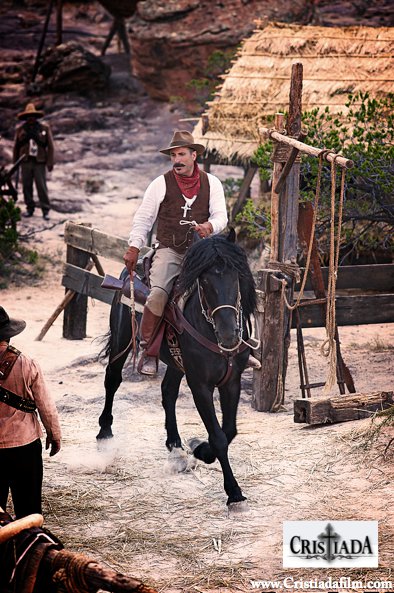
Cristiada

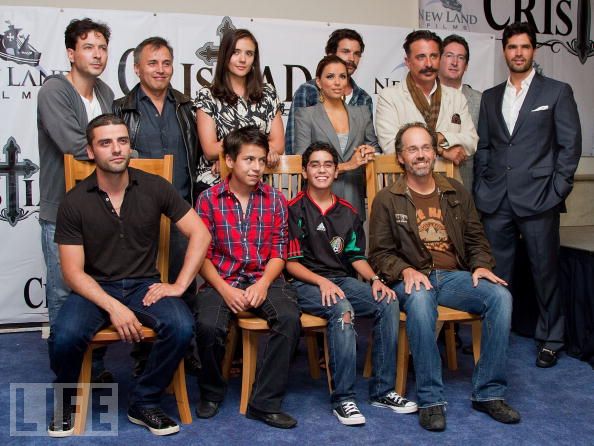
Cast of the upcoming Andy Garcia project CRISTIADA, which just wrapped filming in Mexico

A film that I’m personally looking forward to is Cristiada (official site), starring Andy Garcia, Eva Longoria Parker, Peter O’Toole and Eduardo Verástegui.  The film weaves itself around the Cristero War (also known as the Cristiada ) of 1926 to 1929. It was an uprising and counter-revolution against the Mexican government of the time, set off by religious persecution of Catholics, specifically the strict enforcement of the anti-clerical provisions of the Mexican Constitution of 1917 and the expansion of further anti-clerical laws.

I intereviewed Verástegui in person a few years ago when he was out promoting the release of Bella, the pro-life film that captured the hearts of movie-goers at the 2006 Toronto International Film Festival, one of the most prestigious festivals in the world.  Bella won the People’s Choice Award, the same award that sent Slumdog Millionaire on its path to Oscar gold two years later.

When I talked to him, Verástegui told me that he had renounced films that denigrate his race (he’s Mexican) or his faith (he’s Catholic) or that would offend God in any way. Since Bella, he’s only made one film — the touching 20-minute short, The Butterfly Circus. I fully expect every Verástegui project to be a winner. He’s talented, popular and fully committed to his faith.

Andy Garcia on the set of his new movie CRISTIADA

His reversion to the Church came after his first major success in the U.S. (he’s called the Mexican Brad Pitt because his popularity south of the border rivals that of Mr. Jolie). He fired his staff and sought God’s will. He thought he’d go off to South America and become a missionary, but his spiritual director wisely pointed him back to the jungles of Hollywood where evangelization is far more desperately needed than in the wilds of the Amazon. After turning down dozens of projects that didn’t meet his new faith-based standards, he was broke and living in his Cadillac Escalade. (Only in Hollywood!) Then God’s Providence led him to Leo Severino and Alejandro Gomez Monteverde. The Three Amigos birthed Metanoia Films and Bella. The rest is history … and their future has just begun.

There Be Dragons

Next, the new Roland Joffé,  (The Killing Fields, The Mission) film is already generating a ton of buzz in Catholic and secular circles. Like Cristiada, There Be Dragons is a historical epic. Based on an script originally penned by Catholic screenwriter Barbara Nicolosi, Joffé directs the film set during the Spanish Civil War. According to publicity material, the film’s themes include betrayal, love and hatred, forgiveness, friendship, and finding meaning in everyday life. The film, scheduled to be released next spring, includes the story of revolutionary soldiers, a journalist, his father, and a priest, St. Josemaría Escrivá — a recent Roman Catholic saint and founder of Opus Dei. Escrivá has been called the saint of ordinary life.

There Be Dragons doesn’t boast Cristiada’s all-star cast,  but still brings an impressive slate of veteran actors including Charlie Cox (Stardust), Wes Bentley (American Beauty), Rodrigo Santoro (300), Dougray Scott (Desperate Housewives) and Bond girl Olga Kurylenko (Quantum of Solace).

The film has received indirect support from the personal prelature Opus Dei, which Escrivá founded. Although maligned by Dan Brown in The Da Vinci Code and its sequel Angels and Demons, Opus Dei actually recorded a bounce in membership and attention thanks to the books and films. The organization seems poised to capitalize on this new film, which is sure to generate more interest for Opus Dei — albeit far more positive attention. No murderous albino monks here.

Motive Entertainment, which led the pre-screening blitz for The Passion and the first Chronicles of Narnia film, is already bringing Dragons to leaders with screenings across the country this fall. So far the buzz has been positive. Joffé, who is an agnostic, told the National Catholic Register‘s Tim Drake, “When I decided I would do the movie, I wondered what Josemaria Escrivá might say. I think he would be delighted. He had an all-embracing view of human beings. If certain of our values are lining up, how wonderful that is and what a rich world God’s is.” Read the rest of the interview.

Mary Mother of Christ

Camilla Belle. Hope they change her eye color from blue to brown in post-production!

Nicolosi and her company Origin Entertainment are behind one of the more anticipated upcoming films — the $36-million production of Mary Mother of Christ starring Camilla Belle (The Lost World: Jurassic Park ) as Mary, Al Pacino as Herod and Peter O’Toole as Simeon. Nicolosi tells me that “the shooting has been delayed several times due to financing troubles related to the current economy. The current schedule is for the project to shoot in Jordan in January.” With Nicolosi’s involvement — and the star power of Pacino and O’Toole — this will be one to keep an eye on!

There are several just-released films and some in the hopper worthy of note: the newly released Like Dandelion Dust is being marketed to Christians, a film on Our Lady of Guadalupe is being penned by famed Hollywood screenwriter Joe Eszterhas, Rust (produced and starring Corbin Bernsen came out on DVD this week), The Mighty Macs (which will hopefully be released to DVD soon), a film billed as the Christian version of the Oscar-winning Crash called I Am, and a German film on the 12th century mystic St. Hildegard of Bingen called  Vision. Oscar winning actor Lou Gossett Jr., a professed Christian, may have another hit on his hands with The Grace Card, which hits theaters on Feb. 25, 2011. And soon out on DVD is Robert Duvall’s sensational Get Low.

With the November elections just around the corner, watch for I Want Your Money. And lastly, every adult Christian should understand the horror of abortion. Two phenomenal films that expose the underbelly of the beast we euphemistically call the “abortion industry” are Blood Money (news article) and Maafa 21.


A few more for your consideration (all new on DVD): Bringing Up Bobby, The Mysterious Islands, Upside, the phenomenal Letters to God, The Secrets of Jonathan Sperry and last but not least … my favorite Christian-themed movie of the year: To Save A Life.

With a plethora of films that go against the Hollywood mainstream, we may be witnessing the slow birth of a renaissance in faith-friendly film. Time will tell.

Patrick Novecosky is the founder and editor of The Praetorium.

Pope Benedict makes a splash in the UK

21 Sep

SEPTEMBER 21, 2010 — Despite the fact that secularism has nearly overrun the United Kingdom over the past few decades, the celebration that surrounded Pope Benedict XVI’s historic visit last week was a breath of fresh air. Nearly 100,000 strong gathered to welcome him to Scotland when he landed there on Sept. 16.

Pope Benedict exchanges gifts with Queen Elizabeth

The visit made history on several fronts. It was the first ever state visit to the UK by a pope. Former British Prime Minister Gordon Brown invited the Holy Father in February 2009. Pope John Paul II’s 1982 trip to the UK, by contrast, was a pastoral visit.

On the last day of Benedict’s four-day trip, he beatified Cardinal John Henry Newman, the preeminent Catholic convert of the 19th century. Newman is the first non-martyred Englishman to advance toward canonization since King Henry VIII sat on the throne. It was also the first beatification Pope Benedict has presided over.

Although these “firsts” are significant, perhaps even more significant is the thawing of anti-Catholic sentiment that began to brew in the weeks leading up to the visit. A few prominent atheists called for the Pope’s arrest earlier this year due to the sexual abuse scandal, various secular pundits took swipes in the media at Catholics, and on the second day of the visit, five men were arrested for concocting a terrorist plot against the Pope. Another was arrested the following day. No doubt the prayers of the faithful were instrumental in disrupting the plot.

Pope Benedict’s deliberate and effective message of respect, tolerance and dialogue struck a chord with his listeners. In a live broadcast message to Catholic schools across the UK, he told students that effective science and research require open minds. “The world needs good scientists, but a scientific outlook becomes dangerously narrow if it ignores the religious and ethical dimension of life, just as religion becomes narrow if it rejects the legitimate contribution of science to our understanding.”

In the most delicate political address of his trip, the Holy Father addressed 1,800 British politicians, business leaders and intellectuals at Westminster Hall, the very spot where St. Thomas More was condemned to death in 1535 for refusing to accept Henry’s Act of Supremacy over the Church of England.

Pope Benedict presides over Cardinal Newman's beatification in Birmingham, England

“If the moral principles underpinning the democratic process are themselves determined by nothing more solid than social consensus,” the Pope said, “then the fragility of the process becomes all too evident. Herein lies the real challenge for democracy.” Among those attending were former prime ministers Margaret Thatcher, John Major, Tony Blair and Gordon Brown. The Pope greeted each one personally before leaving the hall amid great applause.

Cool weather and sporadic sprinkles of rain were no obstacle to the 55,000 pilgrims attending the beatification of Cardinal Newman on Sunday. In his homily, the Holy Father said that “in Blessed John Henry, that tradition of gentle scholarship, deep human wisdom and profound love for the Lord has borne rich fruit, as a sign of the abiding presence of the Holy Spirit deep within the heart of God’s people, bringing forth abundant gifts of holiness.”

It remains to be seen whether or not the new Blessed’s intercession will result in a revival, but one thing is sure: The UK will forever be a little brighter after seeing the successor of Peter.

Patrick Novecosky is the founder and editor of The Praetorium.

Design a site like this with WordPress.com
Get started