A bird’s eye view of history

13 Mar

by Patrick Novecosky

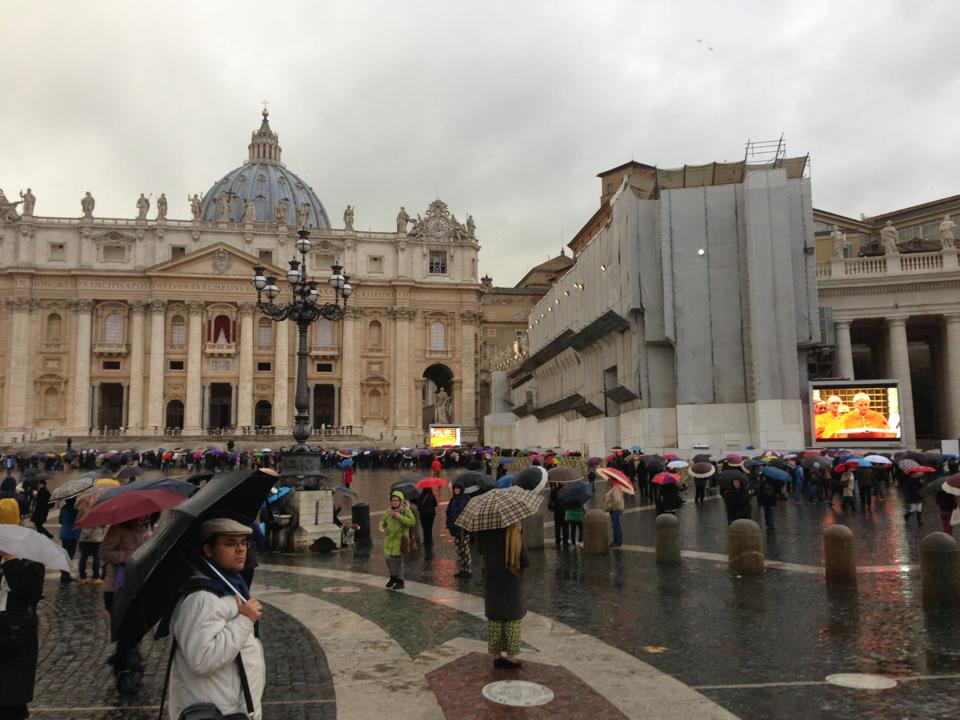
MARCH 13, 2013 (VATICAN CITY) — Having a bird’s eye view on history is not all it’s cracked up to be. When white smoke billowed forth from the Sistine Chapel’s chimney, I was atop the colonnade of St. Peter’s Basilica. At least 100,000 people in the square below had waited hours in the rain and 40-degree weather (single digits in Celsius) for hours in anticipation of the conclave’s decision.
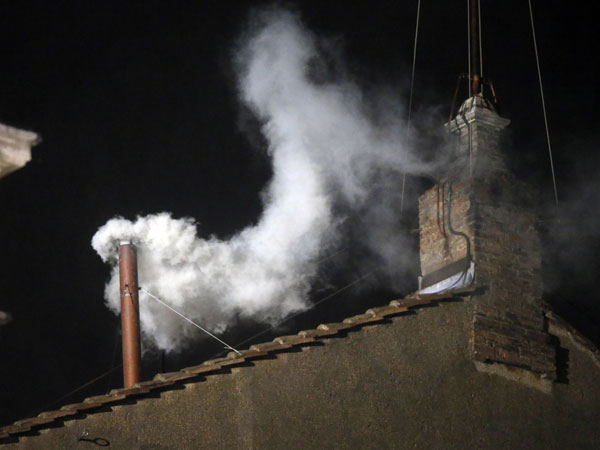
white-smoke1History

This was the second day of balloting. Thousands gathered in front of the basilica yesterday after the first round of voting for the new pontiff. They didn’t expect white smoke, so when black appeared, they merely groaned and turned to leave. This evening was different. The crowd had swelled to near capacity. Indeed, it was nearly impossible to make my way through the crowd, so I walked the perimeter of the square in order to get to the creaky temporary elevator set up to bring the press to the vantage point above the square.

After 30 minutes of picture-taking, I had a sense that history was about to unfold. That was confirmed when I looked at my rain-spattered watch. The Vatican had posted times for the smoke-watchers to fix their gaze upon the chimney. Today’s smoke was supposed to have risen at 7 pm. All of the previous burnings had been early. It was 7:04 pm. Something was up.

Being on top of the colonnade put me at a serious disadvantage over television viewers who could see multiple angles (including the chimney) and those in the square who had full view of large screens, many of which are now permanent fixtures in the square. So when the crowd burst out in shouts of joy and applause a few minutes later, I knew history had been made! Seconds later, the basilica’s bells began to ring — one of them just a few meters above me.

Anticipation

Within 20 minutes, a Swiss Guard brass band, followed by an Italian military band marched into the square below. The clock ticked. At times the minutes felt like hours. The photographers who were perched along the colonnade and the thousands below watched the basilica for any sign that might indicate the announcement of our new Holy Father. Some in the crowd burst into song, others clapped. Thousands of camera flashes popped. But everyone shivered. At time the rain appeared to have turned to snow. My gloveless hands were numb.

A videographer from the Archdiocese of Madrid, Spain, was busily checking her smart phone. “It’s Cardinal Scola,” she said, referring to the archbishop of Milan, Italy. “His twitter account is gone. It has to be him.” I had my iPhone with me, but using my thumbs at this point was useless. Too cold. Minutes later, she said, “Bergoglio? Who is Cardinal Bergoglio?” No one knew. A few clicks on her phone and she answered her own question, “Ah! Argentina!” The crowd was cheering, so we knew the announcement was imminent.

Then, about 75 minutes after the white smoke, red-clad cardinals began coming out onto the balconies beside the center loggia where the new pope would be introduced. The doors of the loggia at the center of the basilica opened. The crowd exploded! Even the often-jaded media folks around me were smiling.  “Habemus papem!” said French Cardinal Jean-Louis Tauran. I could see a lot of red, then the man in white. I had a great view–better than most–but I was still 80 meters away.

Papa Francesco

8424917

Pope Francis smiles upon the pilgrims in St. Peter’s Square

As soon as he spoke, I knew our new Holy Father was a man of great humility. You could hear it in his voice. (My video of his first moments as pontiff.)

“Brothers and sisters, good evening!” he said in perfect Italian to the roaring crowd.

“You know that the duty of the conclave was to give a bishop to Rome. It seems as though my brother cardinals went almost to the end of the world to get him. But here we are. I thank you for your welcome. The diocesan community of Rome has a bishop. Thank you!

“Before all else, I would like to say a prayer for our Bishop Emeritus Benedict XVI. Let us all pray together for him, that the Lord may bless him and that Our Lady may watch over him.”

Wow.

I remember telling a coworker, when John Paul II was ailing in the late 1990s, that whoever succeed him would have to be incredibly humble. Benedict XVI was among the most humble of men. Francis is cut from the same cloth. It’s to be expected. Humility and sanctity go hand-in-hand.

There will be tremendous analysis and scrutiny of this new pope in the days ahead. Is he liberal or conservative? A reformer? An outsider? Will he reform the Roman Curia? What really matters, though, is holiness. I don’t think we will be disappointed.

And our new pope has a sense of humor. After his election and acceptance, he said to his electors, “My brothers, may God forgive you!”

The longtime archbishop of Buenos Aires is the son of middle-class Italian immigrants and is known as a humble man who denied himself the luxuries that previous Buenos Aires cardinals enjoyed. He often rode the bus to work, cooked his own meals and regularly visited the slums that ring Argentina’s capital.

The papacy doesn’t seem to have changed him. After his introduction to the world last night, the Holy Father declined a ride in the papal car. He instead hopped the bus to the residence in the Vatican Gardens where he had been staying with his brother cardinals over the course of the last week.

Francis has come to the Vatican! Viva il papa!

PATRICK NOVECOSKY is the editor of Legatus magazine and this blog.
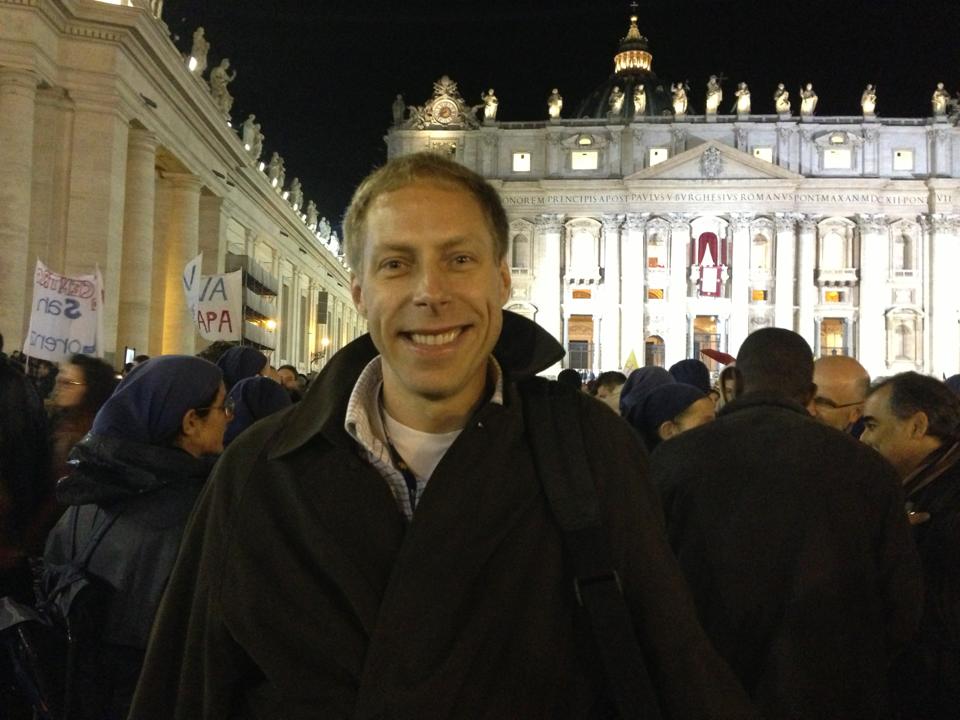
29001_10151321530541697_1089546254_n

Patrick Novecosky in St Peter’s Square after the smoke had cleared

Black smoke. No Pope.

12 Mar
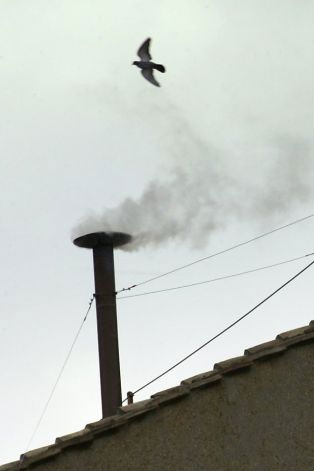
Black smoke billows from the chimney of the Sistine Chapel on March 12.

Black smoke billows from the chimney of the Sistine Chapel on March 12.

by Patrick Novecosky

MARCH 12, 2013–Some cheered, but most of the pilgrims in St. Peter’s Square groaned when black smoke began to billow out of the chimney of the Sistine Chapel this evening at around 7:40 pm local time [2:40 Eastern].

The cardinals’ first vote in the 2013 conclave–as expected–yielded no winner. A two-thirds majority is necessary in order for the future pope to be asked if he accepts the “burden” of the papacy.

“As soon as the cardinals exit the Sistine and get on the mini-buses to the Domus Sanctae Marthae, their residence inside Vatican City,” writes former Vatican reporter John Thavis, “they begin to talk, to reflect on the balloting and, yes, even to promote their candidates to brother cardinals.

“There’s a reason the conclave generally begins with a single ballot in an evening session. The first ballot, which may find 15 or more cardinals receiving votes, gives the lay of the land, and the cardinals have some numbers to work with as they head off to dinner.”

Tomorrow, the cardinals will move from the Domus Sanctae Marthae to the Pauline Chapel at 7:45 am where, at 8:15 am, they will celebrate Mass. At 9:30am they will enter the Sistine Chapel, pray the Liturgy of the Hours, and proceed to the voting process. The next smoke signal is expected around noon in Rome [7 am Eastern].

Around noon, they will return to the Domus Sanctae Marthae and, after lunch there, will go back to the Sistine Chapel at 4:00pm where they will pray briefly and resume the voting procedure until 7:00 pm [2 pm Eastern] when the final smoke of the day is expected to rise.

A billion Catholics wait and pray for the Holy Spirit to inspire the 115 elector who will choose the 266th successor of St. Peter.

Awaiting the smoke

12 Mar
St. Peter's Square, March 12, 5 pm local time.

St. Peter’s Square, March 12, 5 pm local time. Pilgrims watch voting cardinals take a vow of secrecy and loyalty just before the doors closed at the beginning of the conclave.

by Patrick Novecosky

MARCH 12, 2013 — Thousands of people are now crowded into St. Peter’s Square, huddling under umbrellas in the rain. They have been watching this morning’s Mass for the Election of a Pope, which took place inside the basilica, and the 115 cardinal electors processing into the Sistine Chapel this afternoon.

The cardinals then took their vow of loyalty and secrecy before the Master of the Papal Liturgical Celebrations declared, “Extra Omes!” (in Latin, essentially, “If you’re not a cardinal elector, hit the road!”) and closed the doors. Voting has begun!

Rome has been cold and wet these last several days. This morning was warm and sunny, but by early afternoon, the sky clouded over, small hail stones fell on the Vatican and the temperature plummeted. I’m rubbing shoulders and elbows with 5,000 other journalists from around the world, here to witness history — the election of the 266th man to lead the Roman Catholic Church.

Much has been written about who the new Pope will be. The consensus seems to be that his two main tasks will be to reform the Curia–the governance of the Church–and to implement the New Evangelization. Neither is a small task. Most people agree that we need a Pope with the tenacity to clean house at the Vatican and the personality to present the Gospel in a new and attractive way.Who that man will be will remain a mystery until a short time after the bells of St. Peter’s ring again and white smoke billows from the chimney over the Sistine Chapel.

Now, as the sun sets on the first day of the conclave, we await the smoke…

Conclave to elect 266th Pope to begin March 12

7 Mar

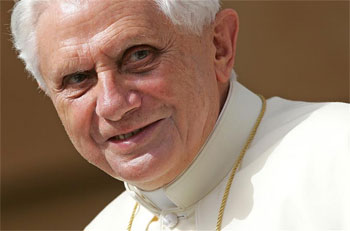
papa-bene It had been nearly 600 years since a successor of St. Peter resigned from his post. After months of reflection and prayer, Pope Benedict XVI became the third pope in the last 1,000 years to resign from the Chair of Peter.

The Feb. 11 announcement that shook the world has now given way to speculation as to who will become the 266th successor of St. Peter. The 115 cardinals who will choose the next pope (including 11 Americans and three Canadians) have already begun to assemble in Rome for meetings, prayer and discernment. Their pre-conclave meetings have drawn the world’s attention.

The resignation

papa-pallium

On April 29, 2009, Pope Benedict XVI placed his own pallium on the tomb of Pope St Peter Celestine V who himself abdicated in 1294

While the surprise announcement took everyone by surprise, Pope Benedict gave several hints at his decision that most Vatican-watchers missed or dismissed.

On April 29, 2009, Pope Benedict stopped in Aquila, Italy, and visited the tomb of an obscure medieval pope named St. Celestine V (1215-1296). After a brief prayer, he left his pallium, the symbol of his episcopal authority as bishop of Rome, on Celestine’s tomb.

As Scott Hahn pointed out, Pope Celestine V was elected “somewhat against his will, shortly before his 80th birthday (Ratzinger was 78 when he was elected pope in 2005). Just five months later, after issuing a formal decree allowing popes to resign (or abdicate, like other rulers), Pope Celestine V exercised that right. And now Pope Benedict XVI has chosen to follow in the footsteps of this venerable model.”

Pope Benedict also indicated his inclination to step down in an interview with German papal biographer Peter Seewald. The writer told German magazine Focus that when he met with the Pope in December, he appeared to have lost vision in one eye, was losing his hearing and looked emaciated.

“I had never seen him so exhausted, so worn out,” Seewald said. “He did not look unwell, but the fatigue that had taken over his whole being, his body and soul could not be missed.”

Seewald quoted Benedict as having said, “I’m an old man, and the strength is ebbing. I think what I’ve done is enough.” When Seewald asked if he was considering giving up the papacy, the Pope responded, “That depends on how much my physical strength will force me to that.”

The conclave

Pope Benedict acknowledged his impending retirement during his first public appearance after the announcement. “I did this in full freedom for the good of the Church, after having prayed at length and having examined my conscience before God, well aware of the seriousness of the act, but equally conscious of no longer being able to carry out the Petrine ministry with the strength that it requires,” he said during his Feb. 13 general audience.

The resignation became official on Feb. 28 when the Pope left the Vatican for his summer residence at Castel Gandolfo. He will live there until remodeling work is completed on the Mater Ecclesiae Monastery in the Vatican Gardens.

In his Feb. 14 address to thousands of priests from the diocese of Rome, in what turned out to be a farewell address in his capacity as their bishop, the Holy Father described his retirement plans.

“Even if I am withdrawing into prayer, I will always be close to all of you, and I am sure that you will be close to me, even if I remain hidden to the world,” he said in his mostly extemporaneous remarks.

Smoke belches from the chimney erected on the roof of the Sistine Chapel

Smoke belches from the chimney erected on the roof of the Sistine Chapel. White smoke means a Pope has been elected. Black smoke indicates no decision.

According to current rules, established by Blessed John Paul II, a period of sede vacante (Latin for “empty seat”) follows a pope’s death or resignation. A conclave of papal electors (cardinals in good standing under the age of 80) must convene between 15-20 days after the Chair of Peter is vacated. Benedict altered those rules, allowing cardinals to shorten the length of the sede vacante. Earlier today, they voted to begin the conclave on Tuesday evening, March 12.

Presiding over the conclave will be the most senior cardinal-bishop under age 80, Cardinal Giovanni Battista Re. Two secret ballots are held each morning and two each afternoon in the Sistine Chapel. A two-thirds majority is required. Ballots are burned after each round.

Black smoke means no decision; white smoke signals that cardinals have chosen a pope and he has accepted. Bells also signal the election of a pope to help avoid possible confusion over the color of smoke coming from chimney of the Sistine Chapel.

The presiding cardinal, if not elected himself, is charged with asking the elected candidate to accept the papacy. If the candidate accepts election, the presiding cardinal will ask what the new pope’s name will be. The cardinals may elect any baptized Catholic male, but since 1389, they have always elected a fellow cardinal.

PATRICK NOVECOSKY is the editor of Legatus magazine. He will be in Rome to for the conclave to elect the next pope. This article appears in the March issue of that publication.

Benedict, the papacy and the conclave

6 Mar

Iowa-Jean-MarkMARCH 6, 2013 — Patrick Novecosky, editor of this blog and editor-in-chief of Legatus magazine, was a guest on Iowa Catholic Radio in Des Moines, Iowa, this morning.

He appeared on the Catholic Radio Iowa Morning Show with Jeanne Wells and Dowling Catholic Hall of Famer Mark Amadeo. They asked Patrick about the upcoming conclave and the tone Pope Benedict set before stepping down from the Chair of Peter. Novecosky reflected on Benedict’s legacy, the changing papacy and the cardinals’ time of prayer today at 5 pm Rome time.

Listen to the full interview by clicking here.

Well done, good and faithful servant

26 Feb

Benedict-waveMy hat’s off to him. Pope Benedict XVI sure knows how to make headlines. His Feb. 11 announcement that he would step down as the Church’s 265th successor of St. Peter was heard around the world.

The Pope’s decision took many by surprise — including New York Cardinal Timothy Dolan who said he was “startled” by the news. But after some reflection, many Vatican-watchers said they had noticed the Holy Father’s decline in energy and his loss of weight over the last couple of months — two of the reasons Benedict gave for stepping aside.

On Thursday evening, the Church will enter a period of sede vacante (Latin for “the seat being vacant”). It’s a time of prayer and reflection — prayer of thanksgiving for Benedict’s papacy and prayer for his successor. A time also for reflecting on what Benedict taught us.

One thing I’ve pondered is the remarkable complementarity between Blessed John Paul II and Benedict. One was a philosopher and poet, the other a theologian and teacher. One an extrovert, the other an introvert. Effortlessly charismatic, John Paul was a natural communicator. Benedict, on the other hand, didn’t shrink from the spotlight, but he didn’t crave it either.

While the two men may have differed in temperament and personality, they were of one mind and one voice when it came to proclaiming the Gospel and the teachings of the Church. Benedict was the natural successor to the man who unpacked and implemented the teachings of the Second Vatican Council. John Paul gave us the new evangelization and Benedict gave it shape and substance — then made it one of the Church’s top priorities in the West.

In the final months of John Paul’s life, he gave serious thought to stepping down. After prayer and reflection, he opted to live out his final days publicly. Who can forget his Easter Sunday 2005 appearance at the window of the papal apartments? Aides had readied a microphone, and he tried to utter a few words but was unable to speak.

While John Paul the extrovert showed us how to die with grace, Benedict the introvert taught us a lesson in surrendering, of not clinging to power and things of the world. This prayerful servant of God knew it was time to hand the Keys of Peter to a younger man. Now let’s beg the Holy Spirit for his guidance for the next Vicar of Christ.

PATRICK NOVECOSKY is Legatus magazine’s editor-in-chief. He will be in Rome to report on the conclave to elect a new pope. This article appears in the March issue of Legatus magazine.

The end of an era: Pope Benedict XVI steps down

13 Feb

kwky-Jean-MarkFEBRUARY 13, 2013 — Patrick Novecosky, editor of this blog and editor-in-chief of Legatus magazine, was a guest on KWKY Radio in Des Moines, Iowa, this morning.

He appeared on the Catholic Radio Iowa Morning Show with Jeanne Wells and Dowling Catholic Hall of Famer Mark Amadeo. They interviewed Patrick about Pope Benedict XVI’s decision to step down effective Feb. 28. The conclave to elect the next Pope will begin in mid-March. Novecosky reflected on Pope Benedict’s decision, his legacy and the future of the papacy.

Listen to the full interview by clicking here.

Design a site like this with WordPress.com
Get started