Archive | culture RSS feed for this section

NBC’s new family-friendly TV movie

12 Jul

JULY 12, 2010 — In case you missed it, a new family movie is coming to NBC this Friday (July 16) at 8 pm Eastern (7 pm Central). I couldn’t resist blogging on this since the company promoting the film is none other Motive Entertainment (the company that has promoted family-friendly fare like  Polar Express and The Chronicles of Narnia). The company is headed by Paul Lauer. My first job south of the border was working for Paul’s YOU! Magazine (formerly Veritas) in 1996. He hired me as the magazine’s assistant editor and it changed my life. We’ll leave that story for another day.
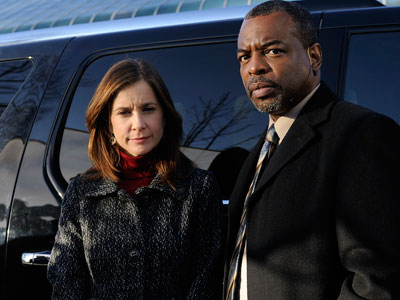
The Jensen Project looks like another winner for NBC (trailer). Motive also promoted the Peacock Network’s last family-friendly movie, Secrets of the Mountain, which debuted on April 16 (USA Network) before airing on NBC last week (July 10).

Both movies are part of a collaboration between Walmart and P&G (Proctor & Gamble) called Family Moments. A third movie, A Walk in My Shoes, is already in post-production and will air later this year. P&G and Walmart will also begin production on their fourth movie this fall. A news release says that the two companies “decided to work together to create programming after hearing from families and advertisers who wanted more quality entertainment options. ”

Aside from the obvious need for more family-friendly entertainment, profit was certainly a motivator, too. Secrets of the Mountain, already out on video, was the highest-rated family movie on broadcast TV in the last six months (watched by more than 7.5 million people).

Justin Kelly stars as Brody Thompson in The Jensen Project

The production values and star power are notched up for The Jensen Project. On the bill are Patricia Richardson (Home Improvement) and LeVar Burton (Roots, Star Trek: The Next Generation). The film also boasts a soundtrack produced by music mogul Randy Jackson (American Idol) that includes songs from Jordin Sparks, Brooke White and Alisan, Ilsey & Jordan.

The story line looks intriguing: A secret community of geniuses conducts underground research to help solve some of the world’s most difficult problems. This sci-fi thriller tells the story of Claire (Kellie Martin, Mystery Woman) and Matt Thompson (Brady Smith), two former scientists who return to The Jensen Project after a 16-year absence.  Together, with their tech-savvy son Brody (Justin Kelly), the family is thrust into a frantic race to keep a potentially dangerous technology from falling into the wrong hands. As the family scrambles to stop the group’s rogue faction, they rediscover the importance of honesty, courage and being there for one another.

Motive’s news release touts the movie as “entertainment that the entire family can enjoy; since it’s on television, it’s essentially available for anyone to watch; and it’s something families can plan to do as an evening together.”

Kellie Martin and LeVar Burton star in The Jensen Project

Motive also noted that high ratings will illustrate to the entertainment industry that there is a significant audience for family movies and programs.

According to Motive’s Vote With Your Remote website, a recent study found that children spend more than 3,000 hours each year consuming entertainment, and a child will see an average of 200,000 violent images on television before age 18.

In addition, nearly 80% of parents expressed concern that “profanity, inappropriate sexual content and violence on TV programs has had a negative impact” on their children. Interestingly, The Jensen Project PR calls the movie family-friendly, but the trailer shows some violence, so take note that the movie may be friendly only if your family members are all over the age of 13.

Let’s hope viewership is through the roof on this one so Hollywood takes note of a vastly under-served market. Who knows, they may even start delving into an even more under-served market — Christian family films.

Patrick Novecosky is the founder and editor of The Praetorium.

Federal judge rules gay ‘marriage’ ban unconstitutional

9 Jul

JULY 9, 2010 — The implications for this story are HUGE. Too many Christians don’t realize the implications of same-sex “marriage.” The biggest is that those of us who hold to a Biblically based understanding of marriage (one man-one woman), will be branded bigots and our interpretation will be branded so under law.

The implications are real and devastating. Children in many states’ public schools are already being taught that same-sex attraction and ‘marriage’ is normal, good and healthy. No civilization in the history of mankind has so deviated from the truth.

Fortunately, most Americans are not convinced. In every state where a constitutional amendment has been put before voters to protect traditional marriage, they have come through. Sadly, our judges and elected officials have continued to perpetuate a false understanding of marriage. It’s up to the citizens of this country to protect marriage as God ordained it, not as Judge Tauro (below) interprets it. Let’s work hard to protect marriage and pray hard for our elected and appointed officials.

BOSTON, MA, July 9, 2010 — A federal judge in Boston has ruled that the federal Defense of Marriage Act (DOMA), which enshrines into law the definition of marriage as between one man and one woman, is unconstitutional.

Judge Joseph Tauro claimed in a ruling Thursday that DOMA violates the right of homosexual couples to equal protection under the U.S. Constitution.

“This court has determined that it is clearly within the authority of the Commonwealth to recognize same-sex marriages among its residents, and to afford those individuals in same-sex marriages any benefits, rights, and privileges to which they are entitled by virtue of their marital status,” wrote the judge.

Read the rest of the article.

Camping: Going home

24 Oct

OCTOBER 24, 2009 — Camping in the wilderness with three small children in a tent for three days is a unforgettable experience — even though there are some aspects of the experience that are forgettable. We’re 100 miles from home zipping down I-75 at 75 mph… again. Michele is driving, the kids are in “zombie mode” watching a show, and I’m reflecting on our camping adventure. I’ve already uploaded most of our pictures to Facebook and video clips to my YouTube account.

But beyond the amazing world of digital technology, something special happens when a family spends a few days together in close quarters. You fight more, you love more and you live more.

We set out on our journey five days ago, driving 750 miles north to the Chattahoochee National Forest. We camped near Cleveland, Georgia, at Jenny’s Creek Campground. On our first night, we found our campsite around 6 pm, pitched our tent and had dinner made just before the sun faded behind the 80-foot maple and oak trees. The little creek winding its way through the camp bubbled as we worked to build a roaring camp fire. The eight-man tent was plenty big enough for the five of us. We packed in two air mattresses and a port-a-crib for Stephen. Despite a small space heater in our tent, it was difficult to keep warm. It’s no wonder. When I got up the next morning, our car said it was 36 degrees. Much chillier than we’ve ever experienced in Southwest Florida.

After a hearty breakfast of eggs and sausage cooked on our handy Coleman camp stove, we met up with some friends who live in Dahlonega, 20 miles from the campsite. We wandered around downtown Dahlonega, the site of the first gold rush in America. After lunch at a local sandwich shop, we drove up to Amicalola Falls State Park, home to a 729-foot (222 m) waterfall — the highest in Georgia. We drove up to the top of the falls, parked and walked to an overlook where we could see the falls tumbling down over the edge. We hiked down a path about 100 yards through the woods, taking in the spectacular beauty of the valley below, the misty-blue hills in distance and the changing fall leaves. It was a great beginning. After checking out the base of the falls, the afternoon was nearly done. We headed back to camp to get a fire going and make dinner.

The second night was warmer. Only 40 degrees when we woke up. Cold noses and hot coffee for breakfast! Michele blew a shoe the day before. So after stopping at Wal-Mart for some new rubber, we were on our way to Helen, a Bavarian-themed village on the outskirts of the Chattahoochee National Forest. Our first stop was more hot coffee! Then up to Anna Ruby Falls, created by two separate streams — Curtis Creek and York Creek — which join at the base of the falls to form Smith Creek. We followed the trail, a half-mile hike from the parking lot. The paved path followed the creek to the base of the falls — a truly spectacular sight.

The kids enjoyed the hills, rocks and trees. They also loved the leaves — red, green and gold. They each had a substantial stash of them leaves by the time we got back to the car. We chose to visit Northern Georgia because it is the closest piece of nature that is substantially different from Southwest Florida. The 100-foot trees, rocks, mountains, streams, varied terrain and chilly weather was just the thing. We all appreciated the change in scenery — especially Michele who has always loved camping, but hadn’t had the opportunity since we had our first child more than six years ago.

Our final night in the tent was the warmest — a low of 58 degrees. We had nearly gotten used to the camping way of life when we woke up on Friday morning. It was after 7:30 am when I heard the pitter-patter of rain falling on our roof. Time to strike the tent and break camp! Wet weather was coming. We were on our way within an hour.

It’s the little things that have made the camping-with-kids experience worthwhile. Waking up to see the children snoozing just inches away, the smell of a roaring campfire, roasted marshmallows, picking Jenna up off the ground after she crashed her bike, throwing rocks into the stream with my three kids, Stephen throwing whatever he could find in the fire and in the trash can, and watching our little two-year-old dancing to Veggie Tales music as we drove.

They say that families who grow up in small homes are closer because they have to learn to exist in cramped quarters. They’re forced to be physically closer, so they grow closer emotionally. I think that’s true, but three days in a tent is a big enough taste for me. I’m looking forward to a shave, shower, clean clothes … and my own bed.

Patrick Novecosky is the founder and editor of The Praetorium.

Camping: Getting there

19 Oct

OCTOBER 19, 2009 — I don’t know about you, but I’m still baffled by most modern technology. I’m sitting in the passenger’s seat whizzing down I-75 at 75 miles per hour and blogging. I’ve got my AT&T air card plugged into my laptop and am connected at a speed that rivals my home Wi-Fi. I don’t know how it works, but I think it’s pretty amazing. I’m no techno geek (at least I don’t think I am), but I’m fascinated by the ability to communicate virtually anywhere.

My wife, three children and I have just begun a great adventure — or what could amount to a great adventure —our first family camping trip. Jonathan, 6, is reading books. Jenna, 4, is listening to Cat Chat on CD with half an ear … bored … talking … asking when she can watch a movie. Stephen, 2, is watching the trees whiz by and singing: “Uh! Uh! Uh!” He alternately takes a basket (formerly filled with books) and puts it on his head saying, “Dark!”

White County Water Falls

White County Water Falls

We’re headed 750 miles north to Cleveland, Georgia. We’ll be camping at the southern edge of the Chattahoochee National Forest where we hope to see three amazing waterfalls, do some hiking and biking (they’re strapped to the back of the minivan), and see some of God’s great creation.

This all began about two weeks ago when, in a fit of insanity after returning home from two trips (10 days away from home), I said to my family at the dinner table: “What would you think about taking a camping trip?” Before I could make any qualifications to my query, everyone at the table unanimously shouted: “YES! When can we leave?” I’ve since learned to keep my road-weary comments to myself.

Anna Ruby Falls

Anna Ruby Falls

Then the planning began. Where to go? What to see? We’ve been in Florida for more than four years and everyone seemed bored of the flat terrain and warm weather (if you can image that). So, Georgia was it. We scoped out a few state parks online, but they all looked a little too much like Florida. South Carolina looked good, too, but a real forest was what held the greatest attraction for me at least. The others were easily swayed. They were ready for just about anything. So when we discovered that the Chattahoochee was within driving distance, we were hooked.

We aired out the tent, brought the camp stove down from the attic and borrowed a few sleeping bags. Amazon shipped me a five-bike carrier for the van and here we are. Michele and I had camped a few times before we had children. We had been waiting for the right time to go. I guess we found it.

Day One didn’t go according to schedule. We planned a 3 p.m. departure, but our minivan battery died as we were about to pull out of the driveway. When I boosted it with my car, we noticed that the battery had a three-year warranty. Lucky break. Then we read the date on the battery: 09/06. Yup. The warranty expired one month ago. Ain’t it always the way. Wal-Mart was good enough to inform me that the battery had a prorated warrant, so I ended up paying exactly half of the new battery’s sticker price.

We’ll be in The Villages in an hour, ending our first night at my in-laws’ rental property. Then an early start should get us through Atlanta before rush hour. We should be camping real hard by dinner time. God willing, of course, and our new battery keeps us going!

Patrick Novecosky is the founder and editor of The Praetorium.

The right kind of health care reform

24 Aug

AUGUST 24, 2009 — I used to marvel at how the U.S. Post Office could move a letter from Miami, Florida, to Fairbanks, Alaska — more than 5,000 miles — for only 44 cents! After doing a little research, I wondered no longer. The post office can’t even move my utility payment half a mile down the street for the price of a stamp.

Most analysts estimate that the USPS will spend $7 billion more than it takes in this fiscal year. As a result, the government monopoly has floated the idea of a five-day delivery cycle, a move that would require Congressional approval. Although the Postal Service receives no tax dollars for its operations, it’s still mandated to provide mail service to everyone in America, and Congress maintains oversight.

Similarly, most government-run programs are running massive deficits. The Government Accountability Office estimated that by 2027, the combined costs of Medicare, Medicaid, Social Security and net deficit interest will eat up all federal revenue. Furthermore, Amtrak would cease to exist without government subsidies. Fannie Mae and Freddie Mac? Disasters.

Without getting into the minute details of ObamaCare, it’s sufficient to say that the government doesn’t have a good track record of running its programs. The nonpartisan Congressional Budget Office estimates that the new health care reform bill introduced by Sen. Max Baucus (D-MT) will cost $880 billion over 10 years. That alone is enough put the brakes on yet another disastrous government boondoggle.

President George W. Bush added $2.5 trillion to the public debt over his eight years. President Barrack Obama has more than doubled that in less than three months — and the meter keeps running.

However, I’m encouraged by prelates like Sioux City Bishop R. Walter Nickless who wrote that “no health care reform is better than the wrong sort of health care reform.” He joins a chorus of bishops across the country who are calling for principled reform that will reduce wasted spending, increase access and help those most in need.

“The Church will not accept any legislation that mandates coverage, public or private, for abortion, euthanasia or embryonic stem-cell research,” Bishop Nickless writes. “We refuse to be made complicit in these evils, which frankly contradict what ‘health care’ should mean.”

As legislation begins to move through Congress, we must make our voices heard. Tea Parties and massive rallies have drawn national headlines, but we also have to make sure our congressmen know that health care reform has to respect all human life, include guarantees that it won’t add to our already crippling deficit, and that conscience rights are protected for health care workers who object to controversial procedures.

Massive government spending is not the answer to health care reform, nor is it the answer to the recession. Let’s work hard and pray for a solution that respects life and the private sector.

Patrick Novecosky is the editor of The Praetorium and Legatus Magazine. This editorial appeared in the October 2009 issue of Legatus Magazine.

Freedom for all

3 Jul

us_and_canadian_flagJULY 3, 2009 — I’m a new American. A few hours after my son was born two years ago, I raised my right hand and took the oath of citizenship. I swore to “defend the Constitution and laws of the United States of America” because the Constitution’s values are essential to a healthy, just and moral society. This fact seems to be lost on some of our elected officials who should renew their own commitment to the Constitution, particularly the First Amendment rights to religious liberty.

America was founded by Christians who wanted a nation where the free exercise of religion was permitted and encouraged. George Washington famously said that “of all the dispositions and habits which lead to political prosperity, religion and morality are indispensable supports.”

John Adams, the second President, added to that idea, saying that “our Constitution was made only for a moral and religious people. It is wholly inadequate to the government of any other.”

Over the past several decades, the culture has taken the Founding Fathers’ idea of religion as an unshakable support for freedom and turned it on its head. The First Amendment allows for the “free exercise” of religion. But activist judges and the mainstream media have interpreted the “freedom of religion” as the “freedom from religion.” Groups like the ACLU strive to eradicate of all religion from the public square.

And when Christians stand up to voice their concerns, those in power do everything they can to silence them. In March, the Bridgeport diocese bused Catholics to a rally to protest a bill that impinged on religious freedom. Bishop William Lori urged parishioners to contact lawmakers about that legislation and another bill to legalize same-sex “marriage.”

In June, the Connecticut Office of State Ethics launched a probe into whether the diocese acted as a “lobbying organization” in heading off the bills. When a Catholic diocese can’t exercise its constitutional rights to free speech and assembly, something has gone terribly wrong with the American Experiment. There’s little doubt that much of the blame is ours. Irish statesman Edmund Burke said that “the only thing necessary for the triumph of evil is for good men to do nothing.”

However, we might want take a page from the ACLU’s playbook, which urges its members to be in touch with legislators who “believe that a letter represents not only the position of the writer but also many other (100) constituents who did not take the time to write.”

I’ve always contended that politics follows culture. If lawmakers want votes, they have no choice. By changing the culture one soul at a time and urging our lawmakers to follow, we will light the way to reestablishing religious freedom in America.

Patrick Novecosky is the editor of The Praetorium and Legatus Magazine. He emigrated to the United States from Canada in 1996. This editorial appeared in the July/August 2009 issue of Legatus Magazine.

Father Corapi: Live!

29 Jun
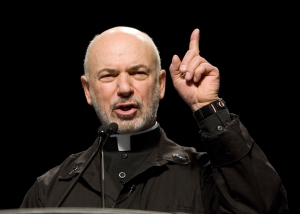
Father Corapi will preach a one-day retreat in Buffalo on Aug. 15. (George Martell photo)

Father Corapi will preach a one-day retreat in Buffalo on Aug. 15 (George Martell photo)

JUNE 29, 2009 — Father John Corapi has a profound way of telling it like it is. The renowned preacher’s booming baritone cuts through the clutter of easy answers and points to the fundamentals of our faith. The dynamic evangelist, who fashioned his ministry around the mold of Archbishop Fulton Sheen, suspended his hectic travel schedule two years ago, then fell ill.

Now restored to health, Fr. Corapi will preach one-day retreat on the Holy Spirit in Buffalo to more than 15,000 people on Aug. 15. EWTN’s Raymond Arroyo will speak at the conference, and Catholic Answers Live host Jerry Usher will serve as emcee. Father Corapi spoke to Legatus Magazine editor Patrick Novecosky from his headquarters in Montana.

How is your health these days?

Excellent. I was incapacitated for about eight months. Even the Mayo Clinic had difficulty getting the diagnosis right. It turned out to be two very simple things: an acute Vitamin D deficiency and chronic sleep deprivation. Those two things together disrupted my immune system. Now I’m back to normal.

The topic of my doctoral thesis in dogmatic theology was on the meaning of Christian suffering in the teaching of Pope John Paul II. So we always have to look at the transcendent dimension of something like sickness or suffering and realize it’s not a useless thing. It can be a channel for grace. Pope John Paul II’s fantastic apostolic letter on suffering Salvifici Doloris is a synthesis of this.

How has your ministry changed since your recovery?

I never stopped my ministry. I was sick for a while, but I think the part you mean is the traveling. Before I became sick, we had already decided to stop traveling for a while. We had no idea that I would become sick, but if I had my normal 35-40 events per year scheduled it would have been a catastrophe.

The decision to not travel so much is based mainly on my mission, established by my superiors, to preach using the means of social communication — television, radio and the Internet. We reach millions of people that way.

Traveling and doing events is a good thing but, on the hierarchy of effectiveness, it’s much less effort to reach millions of people than going to a conference and only talking to a thousand. Next year we hope to accept a few invitations, but not nearly as many as we used to. With the volume of work we have now, it’s just not physically possible.

The world is going through trying times — both economically and morally. What’s the remedy?

In order to remedy catastrophes like this, it has to be one person at a time. Pope John Paul II said a very profound thing in his post-synod apostolic exhortation on reconciliation and penance. He said that all of the divisions we see in the world — country against country, within individual countries, within families — can all be traced back to divisions within individual human persons called sin.

So the renewal of the country, the world, and the Church comes about one person at a time. Saint Francis of Assisi gave a great example of that. He didn’t set out to reform the Church and the world, he set out to reform himself. He he did such a great job that he ended up reforming the Church — and through the Church, the world.

When enough Catholics become true to their calling, a great power will be unleashed. The reason we have this mess, in my estimation, is because the vast majority of Catholics have not lived their faith. We have a billion Catholics on the face of the earth. If they knew their faith, lived their faith, loved their faith, I assure you that the world would be a very different place.

The United States, the situation would be profoundly different if we had 60-70 million Catholics truly living their faith. But, of course, as many as 80% don’t even go to Mass on Sunday — and that’s a precept! So we have a long way to go. But it has to be kind of grassroots, one person at a time. That is why the Church has always encouraged personal holiness, because that is where the reform is going to come from.

How did the conference in Buffalo come about?

We’ve done several events in the past with Buffalo’s Catholic radio station. They wanted to do a large event, so it fell into place. This is shaping up to be the largest event that I’ve ever preached at. Already 10,000 people are registered.

The topic is going to be on the power of the Holy Spirit. It’s a powerful thing to combine Catholic teaching on the Holy Spirit in a very practical and powerful way with the troubled times we find ourselves in. These are no ordinary times. It’s not just a downturn in the economy. We’re already well into a downturn morally, economically, socially. It’s almost cataclysmic. We have the answer. The problem is that we have to convince enough of our own people that there is a problem and teach them how to solve it.

How is the Holy Spirit key to America’s spiritual awakening?

Obviously, they are intimately tied together. I’ve been a harsh critic of ourselves, meaning the Church leadership — priests, bishops and theologians. I don’t think we’ve done a particularly good job in my lifetime. We’ve had great popes; the top of the hierarchy has always been fantastic. But we’ve had a serious problem with “middle management.” There has been a significant problem with bishops and priests. Although, it’s better now than it was 20 years ago. However, the vast majority of Catholics aren’t even going to Church, so we shouldn’t wonder that the Church has been losing its influence on an increasingly secularized society.

You have to ask yourself why people have drifted away. I’m sure there are a lot of societal reasons. We don’t have control over those reasons, but we have control over the reasons inside the Church. You can start with the top. There is an old saying: “The fish stinks from the head down.” Lousy leadership is a disaster.

I once asked an old Carmelite nun why we have a crisis of leadership inside the Church as well as in the secular order. She never batted an eye. She had been a nun for over 60 years and a prioress for decades. She said, “That’s easy. Punishment for sin.” Why do we have bad leadership? Punishment for sin. It’s very biblical. You go back to the Old Testament and you see that leadership was removed from the people of God, the chosen people, because of infidelity to the covenant. They cried out to God because they had no priest, prophet or king. Why not? Because they were unfaithful.

One can recall what happened during the tenure of Pope Paul VI, when he came out with his landmark and prophetic encyclical Humane Vitae. Significant numbers of bishops, priests, theologians and others rejected it. They absolutely rejected it. The majority of Canadian bishops signed the infamous Winnipeg Statement that just categorically rejected Humane Vitae. That kind of rebellion is catastrophic. Paul VI was prophetic with that encyclical and much of what he warned about has come to pass.

The argument can be strongly made that the proliferation of abortion can pretty much be traced to artificial contraception. It’s almost a cause-and-effect kind of thing, and Paul VI warned about that. But large numbers of Church leaders rejected it and were so bold as to even reject it in writing, and that’s not without consequences. There were profound consequences not only in the Church but in the United States, Canada and the whole world. It’s had a profound effect on de-Christianizing the culture.

I always hope that things will get turned around. My mother reminds me periodically that we know the last chapter: We win! So I don’t know when it will get turned around. And don’t think for a minute that the best is going to happen without a bitter fight! We’re just heading into a tremendous period of spiritual and moral combat. We have a situation where the secular order, government and so forth are unashamedly anti-Christian and the Catholic Church is getting the brunt of the attack. I’m sure it’s going to get worse before it gets better. What we have to go through between now and then, I’m not so sure. I hope for the best, but I plan for the worst.

Tell me more about the focus of your ministry.

Before I was ordained, Fr. James Flanagan, the founder of my congregation —the Society Our Lady of the Most Holy Trinity — told me that my mission in the Church would be to preach using the means of social communication using Archbishop Fulton Sheen as the model. It took me a few years to get on television and radio, but around 1996 we started to get on EWTN radio and then television — then non-stop Saturday and Sunday night for 12 years.

Now with the Internet, my website is reaching more and more people. We have a weekly webcast called Weekly Wisdom. We’re almost ready with a new redesigned website with new downloadable material. When I started, we were reaching dozens, then hundreds, then thousands. Now it’s up in the millions and tens of millions. EWTN tells me that we reach over 130 countries and territories every week — over 150 million households and that’s just television. We’re also on dozens of Catholic radio networks.

With the Internet, you can say something, put it on your website and before you can blink your eye it’s all over the place. So it’s a very rapid deployment (to use a military term) of news. With all those things together, we are reaching more and more people more effectively.

Patrick Novecosky is the editor of Legatus Magazine. An abridged version of this interview was published in the July/August 2009 issue of Legatus Magazine.

Design a site like this with WordPress.com
Get started